
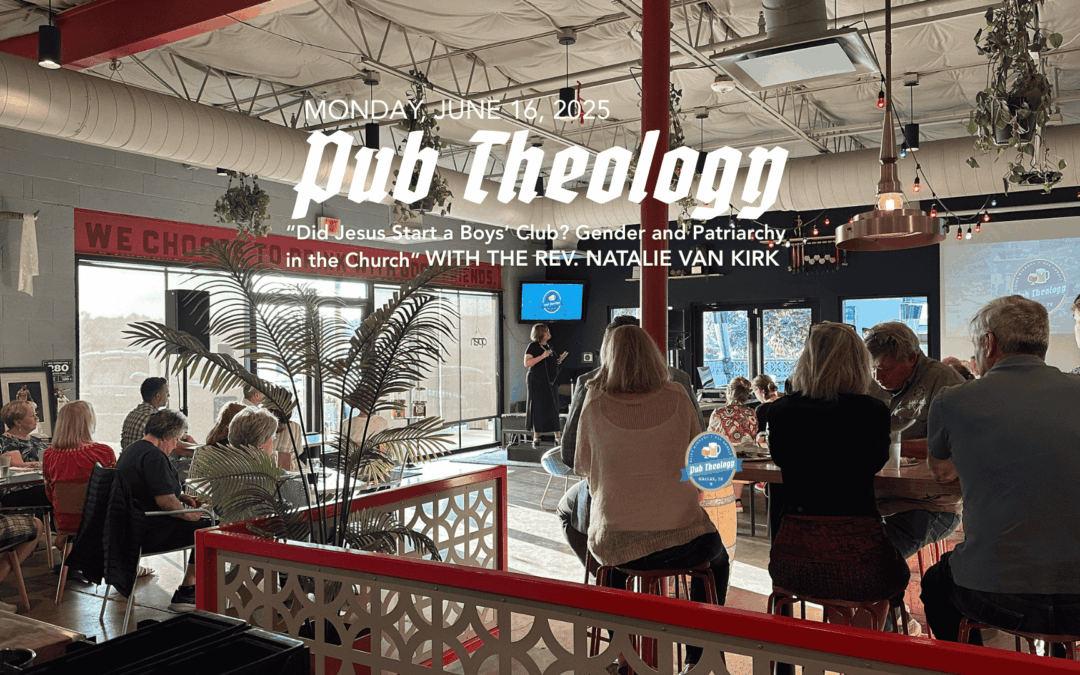
On the third evening of Pub Theology, the Saint Michael community gathered once again for a thought-provoking and deeply engaging session—this time led by the Rev. Natalie Van Kirk, theologian, teacher, and rector at Church of the Good Shepherd in Brentwood, Tennessee. A former staff member and ordinand from Saint Michael and All Angels, Natalie returned "home" to explore the vital question: Did Jesus Start a Boys’ Club? Gender and Patriarchy in the Church.
Spoiler alert: her answer is a resounding no—but not without nuance, biblical depth, and personal testimony.
Missed it? Watch the full talk here:
Making a Biblical and Theological Case
The Rev. Natalie Van Kirk opened her talk with a clear aim: to build a constructive biblical and theological case for the authoritative public ministry of women. She clarified that her argument wouldn’t rely on modern categories like “fairness” or “rights,” but would instead stay grounded in scripture and tradition.
Beginning with Genesis, she reminded us that both men and women are created in the image of God—a likeness that centers on creativity, free will, consciousness, emotional connection, and the capacity to love. None of these traits, she pointed out, are gendered. In Hebrew, the phrase describing Eve as Adam’s “helper” actually translates to ezer kenegdo—a “saving strength corresponding to him.” Far from a subordinate role, this language highlights partnership and mutuality, not hierarchy.
She then walked through the impact of Greco-Roman views on gender, particularly how Aristotle’s influence, and later Thomas Aquinas’s adaptation of it, shaped a theology that regarded women as “deficient men.” But, she argued, this doesn’t reflect God’s intent in creation or Jesus’s example in ministry.
What About Jesus and the Apostles?
A common objection to women’s ordination is that Jesus chose only male apostles. The Rev. Natalie Van Kirk responded by pointing out that the Twelve were symbolic representatives of the twelve patriarchs of Israel, chosen not because of gender norms but because of their symbolic meaning. Meanwhile, women played pivotal roles throughout Jesus’s life and ministry:
- Mary, Jesus’s mother, was the first to believe and proclaim the incarnation.
- Mary Magdalene was the first witness to the resurrection, earning her the title Apostle to the Apostles.
Far from being excluded, women were entrusted with the most important messages in the Gospel story.
Prophets, Priests, and Misunderstood Paul
In a striking insight, the Rev. Natalie Van Kirk reminded us that while the Old Testament priesthood was male (largely to distinguish it from pagan cult practices), the role of prophet—which carried even more authority—was often held by women. Figures like Miriam, Deborah, and Huldah had divine authority and leadership roles in Israel's history.
She also addressed the misunderstood writings of St. Paul. With references to scholars like N.T. Wright, she unpacked passages that are often seen as anti-woman, explaining that in context, Paul’s words about mutual authority in marriage and unmarried women’s freedom were radically progressive in the Greco-Roman world.
Even the controversial 1 Timothy 2:12, she said, is likely a reflection of poor translation and specific issues in the Ephesian church, not a universal ban on women speaking or leading.
The Personal Cost of Ministry
The Rev. Natalie Van Kirk ended the evening by answering audience questions, including one about her own experience with sexism and abuse in ministry. She shared painful but honest stories, ranging from diminutive introductions in clergy meetings to overtly misogynistic comments about her vocation and appearance. Her reflections were candid and sobering, but also full of faith:
"We serve Jesus. We don’t serve the church, and we don’t serve men."
Her stories reminded us that the call to ministry—especially for women—is often accompanied by resistance, but also by courage, perseverance, and the Spirit's guidance.
Final Thoughts
The third night of Pub Theology left attendees challenged and inspired. The Rev. Natalie Van Kirk's teaching was not only theologically rich—it was pastorally grounded and rooted in the lived experience of ministry. She made a clear and faithful case: that the Gospel invites all of us, male and female, into the work of proclaiming good news, leading God’s people, and bearing witness to Christ.
And as for whether Jesus started a boys’ club? The answer remains no.


