
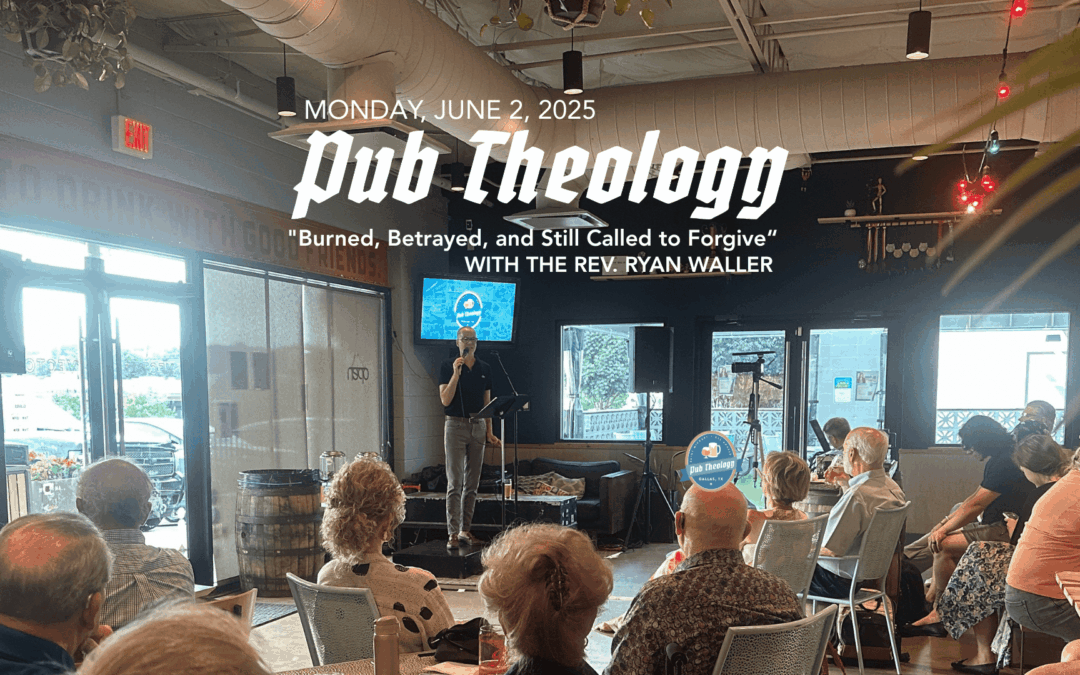
We kicked off our summer Pub Theology series on Monday, June 2, with an incredible evening of reflection, honesty, and real conversation around one of the most difficult topics in the Christian life: forgiveness.
Our guest speaker, the Rev. Ryan Waller, led us through a deeply thoughtful and vulnerable exploration titled “Burned, Betrayed, and Still Called to Forgive: Christians and the Forgiveness of Others.” With humor, wisdom, and pastoral insight, Ryan walked us through the ways betrayal and pain intersect with the hard but necessary Christian call to forgive.
Missed it? Watch the full talk here:
Why Forgiveness?
Ryan opened by naming what many of us already know but don’t always say aloud: forgiveness is hard—especially when we’ve been deeply hurt. But Jesus was relentless in his command to forgive. Not because it’s easy, but because it’s essential.
He reminded us that the Greek word Jesus used for forgiveness—aphiemi—literally means “drop the rope.” As in, stop the tug-of-war. Let it go. Because unforgiveness doesn’t just bind others—it binds us. Holding on to resentment, Ryan said, is like “drinking poison and hoping someone else dies.”
For people in recovery, forgiveness isn’t a spiritual luxury—it’s survival. And as people of faith, we’re all in recovery of one kind or another.
What Forgiveness Isn’t
One of the most helpful takeaways from the evening was Ryan’s clarity on what forgiveness is not:
- It doesn’t mean pretending the pain didn’t happen
- It doesn’t require reconciliation—some people are not safe to be in relationship with
- It isn’t weakness—in fact, holding onto anger often makes us prisoners of our own pain
Forgiveness Is a Skill—And a Choice
Drawing on research from Stanford psychologist Dr. Fred Luskin, Ryan emphasized that forgiveness is a skill we can learn, not a feeling we passively wait for. One of the first steps? Change your story.
Instead of staying stuck in a narrative of powerlessness—“he broke me,” “she betrayed me”—we can begin to reclaim authorship of our lives. Ryan said forgiveness is not about letting the other person off the hook—it’s about setting ourselves free.
Start Small, Practice Often
Ryan also reminded us that we can’t start with the biggest wounds. Forgiveness grows through practice—by letting go in the small, daily moments of irritation and misunderstanding. He shared a light-hearted story of mistakenly running a stop sign and receiving forgiveness from a stranger—an interaction that, while small, left a lasting impression.
Forgiveness Is Divine Creativity
In perhaps the most powerful image of the night, Ryan described forgiveness as the highest act of human creativity—a way of making something out of nothing. It’s what God does, and what we’re invited to do as image-bearers of the divine. Without forgiveness, life becomes a closed story. With it, new futures become possible.
He shared the extraordinary story of Mary Johnson, a Minneapolis mother who forgave the man who murdered her son—and eventually formed a reconciliation ministry with him. Without forgiveness: a dead son and a grieving mother. With forgiveness: transformation and healing that impacted an entire community.
A Call to Let Go
The night closed with an invitation: What if forgiveness is less about them, and more about you? What if choosing peace is the most powerful act you could make—not because the hurt didn’t happen, but because you deserve to be free?
As Ryan said in closing:
“May you go forth from this place feeling the love and forgiveness of God.”


