By Tom Hammond-Davies, Director of Music
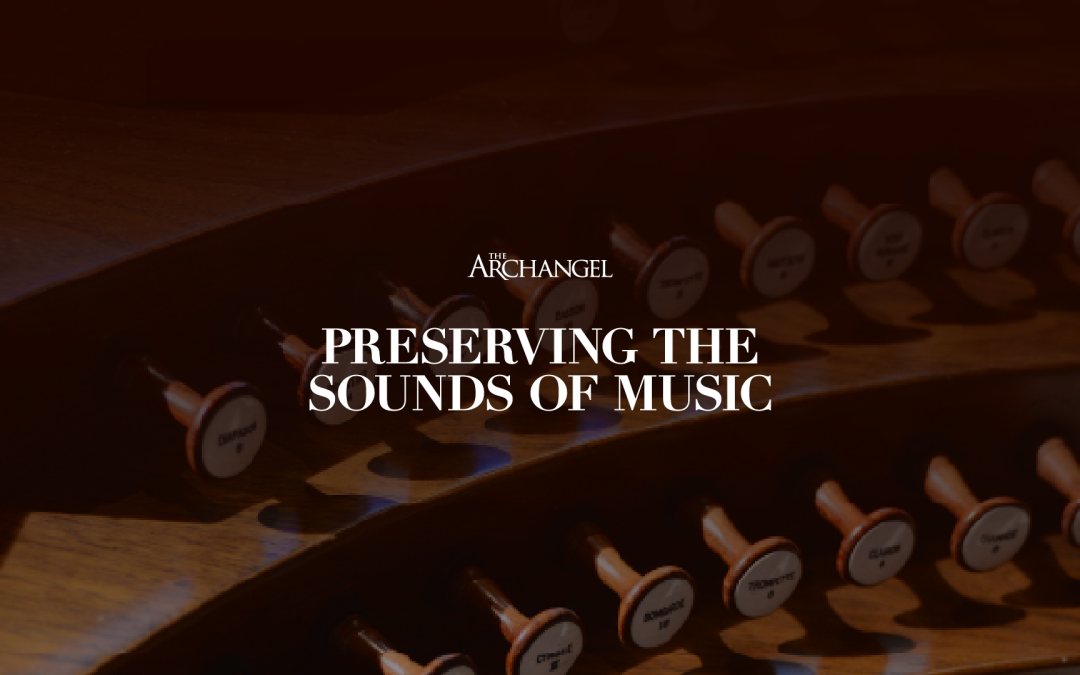
Over the past months, many of you will have heard conversations about the future of the organ in the main Sanctuary at Saint Michael. Because the organ plays such an important role in our worship life, I wanted to share a little of the story behind the decision we are now taking together.
At Saint Michael, music is not an accessory to worship. It is one of the primary ways we pray and learn together as a community. The organ supports congregational singing, accompanies the Choir, and helps shape the great musical moments of the Church year. When it works well, it becomes almost invisible, enabling the whole congregation to sing with confidence and joy.
For many years, the current instrument has served us well. However, it is increasingly showing its age. The organ we have today is a hybrid instrument, combining elements from a Möller organ built in 1961 and a Schudi instrument installed in 1985. While it can still produce some thrilling sounds, its underlying condition has become increasingly fragile.
Over time, components have deteriorated, pipes have failed, and internal mechanisms have become unreliable. More than two dozen pipes are currently unusable, and some parts of the instrument no longer behave predictably from week to week. In 2025, we even experienced a complete failure during Holy Week. These kinds of incidents remind us that the instrument is reaching the end of its practical life in its current form.
Alongside these mechanical issues, there are also challenges relating to the way the organ sits in the building. Much of the instrument speaks sideways into the choir loft rather than directly into the Church, which means it must play very loudly for the congregation to hear it clearly. Sound levels in the loft can reach uncomfortable levels for the Choir, while the congregation in the nave still experiences an uneven sound.
These problems have been studied carefully over several years. Reports from the Organ Committee, our acoustical consultants, and organ experts have all reached the same conclusion: the current instrument cannot continue indefinitely as it is.
At the same time, Saint Michael is entering an exciting period of development as our campus expands and our long-term plans for the Sanctuary take shape. That wider vision includes the possibility of a new pipe organ in the future—one designed properly for the building and capable of serving the parish for generations.
However, building a major pipe organ is a large undertaking that requires careful planning, architectural coordination, and significant fundraising. In the meantime, we need a reliable instrument that allows worship to continue at the high musical standard that Saint Michael has always valued.
For that reason, we are installing a digital organ as an interim step.
Modern digital organs are very different from the electronic instruments many people may remember from decades ago. Today’s instruments use sophisticated sampling technology, capturing the sound of real pipe organs in extraordinary detail. The system we are installing is based on a platform called Hauptwerk, widely used by professional musicians and institutions around the world.
What this means in practice is that the organist will be playing a beautifully crafted console that controls a highly realistic digital instrument, chosen specifically for our Sanctuary through a carefully designed speaker system, voiced by our sound consultants Salas O’Brien. The aim is to provide a dependable instrument that supports congregational singing, accompanies the Choir with warmth and clarity, and allows the full life of the Music Ministry to continue without interruption.
Importantly, this digital instrument is not the final destination, but a strategic step forward.
One of the advantages of this approach is flexibility. When the time comes to install a new pipe organ, the digital instrument will not become obsolete. Instead, it can be relocated to the front of the Church and used for chancel services, such as Evensong and Lessons and Carols, and occasions when it is helpful for the organist to be visible to the congregation, such as organ recitals and concerts. In other words, it will continue to serve the parish long after the pipe organ project is complete.
In the life of the Church, instruments and buildings evolve over time. Very few great church organs appear fully formed in a single moment. More often, they develop across generations, as congregations grow, spaces change, and musical needs become clearer. This step allows us to care well for the present while preparing wisely for the future.
Above all, our goal remains the same: to support worship that is prayerful, joyful, and deeply rooted in the Anglican musical tradition. Saint Michael is a church that treasures the sound of a real pipe organ, and we look forward to the day when a new instrument can once again fill this space with its living breath.
Until that day comes, this digital organ will help ensure that our worship continues with confidence, beauty, and strength.
The installation will take place after Easter, and I look forward to sharing this next chapter with you!
**This article was written by Tom Hammond-Davies and was featured in the 2026 Summer Archangel.
Read More Featured Archangel Articles

The Ministry of Lay Chaplaincy: Reflections from the Bedside
The Four Pillars of Discipleship
All Angels Legacy
Women of Saint Michael
This year, we gather as the Women of Saint Michael around a shared goal: Becoming Better Equipped—Together.

Darin Kinder: Discovering God’s Purpose in the Aftermath of 9/11
September 11, 2001, is a day that changed everything. All of us can remember where we were when we heard the news.