The Building our Future Series: Part Six of Six
By Meredith Turner
A few years ago, the Rev. Christopher D. Girata gathered the Saint Michael clergy and posed a simple but important question: “What does a healthy disciple look like at Saint Michael?” In other words: “How does that person live?” “What do they prioritize?” “What habits shape their faith?”
The answers led to a deeper exploration of the Baptismal Covenant—the promises that anchor our identity as Christians. Through that work emerged what we now know as Saint Michael’s four pillars of discipleship: Pray, Learn, Serve, and Give.
These pillars are not a program or a checklist. They are a framework for living out the transformation that begins in baptism and continues throughout a lifetime. They reflect both our Anglican tradition and the unique character of Saint Michael.
“Jesus says, ‘Follow me’ far more often than He says, ‘Believe in me,’” Chris explains. “The doing of discipleship really matters.”
Discipleship, then, is more than belief. It is a commitment—a commitment that requires intention, practice, and accountability. As we encourage one another in faith, we become more vulnerable, more honest, and more willing to let others help us stay true to the promises we have made to God.
Over time, that kind of discipleship has the power to transform not only individuals, but entire communities.
As Saint Michael opens its new building, the goal is not simply to create more space. It is to create a platform for deeper discipleship—one that equips people to live faithfully and inspires future generations to do the same.
 The first pillar, pray, lies at the heart of Anglican spirituality. Saint Michael embraces the Episcopal understanding that praying shapes believing—that the practices of prayer form and shape our faith over time. Through the richness of the Book of Common Prayer, worship, the Daily Office, and the Eucharist, we are invited into a rhythm of prayer that gradually becomes woven into the fabric of our lives.
“Our prayer life shapes our identity,” Chris says.
This formation happens slowly and steadily. Week after week, year after year, prayer grounds us in the promises of God and the hope of the resurrection. It gives language to our joys, our griefs, and our deepest longings. Over time, those prayers become part of who we are.
 Learning has always been central to the Episcopal tradition, and Saint Michael is no exception. Faith invites us not only to love God with our hearts, but also with our minds. We study Scripture, theology, history, and spirituality because understanding deepens faith and equips us to live it more fully.
Investing in education was a central focus for this historic building project, and that is in service of our discipleship being shaped by learning. It’s not hard for us to understand how learning works as disciples of Jesus but making sure that we commit to learning is a shift that is taking place right now.
In recent years, Saint Michael has intentionally shifted from the one-off educational events toward steady, consistent, and intentional learning. As disciples, we are encouraged to engage in learning over time—returning week after week to wrestle with ideas, ask questions, and discover how faith intersects with daily life. That steady cycle allows learning to move from the head to the heart.
As part of the new campus, significant space has been dedicated to education and learning, creating new opportunities for disciples of every age to gather, learn, and grow together.
 Service has long been woven into the DNA of Saint Michael. From its earliest days, the parish has understood that those who have been given a lot, much is expected. Through generations of faithful leadership and volunteerism, Saint Michael has helped establish and support ministries that continue to strengthen our city and serve those in need. The idea that we give in support of others has become part of the culture of Saint Michael. The discipleship in this church is changing the community in meaningful ways.
But service is about more than financial support. “Money can only go so far,” Chris notes. “It can help fuel the good work that well-formed disciples can do in the world.”
The deeper goal is to cultivate disciples who recognize their gifts and understand that those gifts are meant to be shared. Whether serving through outreach ministries, volunteering in the community, or caring for a neighbor in need, service becomes a tangible expression of faith. While no single act of service can solve every problem, discipleship expressed through service changes lives—both for those who receive it and for those who offer it.
 Perhaps no pillar is more countercultural than giving. Many churches find it uncomfortable to talk about money, but Saint Michael has intentionally embraced giving as an essential part of discipleship. Not because the Church needs money, but because giving shapes the giver. Jesus spoke frequently about money because He understood its power over the human heart. The things we value most often reveal where our trust truly lies.
Giving challenges that instinct. When we give, we release our grip on what the world tells us is most important and instead place our trust in God. Giving becomes a spiritual discipline that moves discipleship from theory into practice.
“It is much more important that we give than that the church receives our giving,” Chris says.
Of course, the resources entrusted to the Church enable ministry, outreach, worship, and formation. But the deeper purpose of giving is transformation. Through generosity, disciples learn to place Christ—not possessions, status, or security—at the center of their lives.
 BUILDING A CULTURE OF DISCIPLESHIP
The four pillars of Pray, Learn, Serve, and Give are ultimately not about programs, buildings, or initiatives. They are about people. They are about becoming the disciples God created us to be.
As Saint Michael enters a new chapter in its history, these pillars remain the foundation upon which the future will be built. The new spaces will support worship, learning, fellowship, and outreach, but the true work of the Church will continue to be the formation of faithful disciples—people whose lives are shaped by prayer, deepened by learning, expressed through service, and strengthened through generosity.
That vision has guided Saint Michael for generations, and it continues to point the way forward.
This is the last article in a six-part series. The first, second, third, fourth, and fifth articles were published in the Summer 2025, Fall 2025, Winter 2025, and Spring 2026 issues of The Archangel, respectively.
**This article was written by Meredith Turner and was featured in the 2026 Fall Archangel.
Read More Featured Archangel Articles
A Sweet Return: St. Mary’s Guild Moves in to the New Cafe
So Much More than a Meal
Building the Heart of our Campus
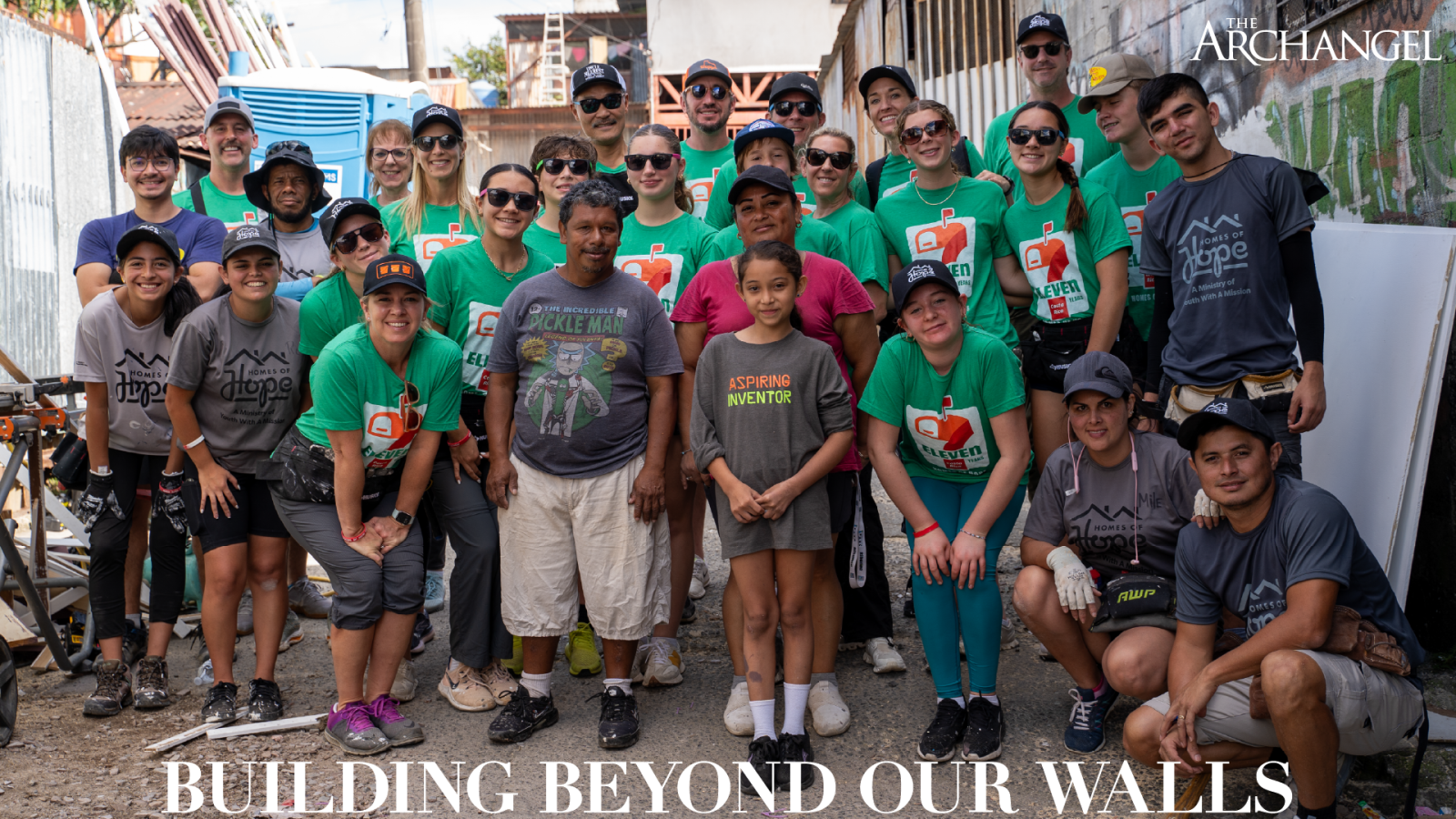
Building Beyond Our Walls
Turning Trees Into Treasure
Sunday Worship Spaces Reimagined by the Rev. David M. Faulkner
Excitement is in the air as we move towards the opening of the revitalized Saint Michael campus on Sunday, August 2!